Solar panels on balconies shimmer quietly in the sunlight, not only illuminating homes but also subtly changing the way we use electricity. In Germany, 435,000 new balcony solar systems were installed in 2024, generating an average of 1,500 kWh per household annually, saving €228 in electricity bills, with a payback period of only 3-5 years. With the implementation of China's "county-wide promotion" policy and the EU's "REPowerEU" program, distributed solar power is rapidly entering ordinary households.
However, as more and more families install solar systems on their balconies, the problem of electricity backflow—excess electricity flowing back into the public grid when solar power generation exceeds household electricity demand—has become a pain point for the industry. This backflow can cause voltage fluctuations, equipment damage, and even safety accidents, and local power grid companies strictly control it.
Compared to mature European markets, the development of balcony solar power in China still faces two major challenges: At the policy level, Europe enjoys fixed electricity price subsidies and simplified approval processes; Germany even explicitly states that installing a balcony solar system does not require registration with the grid operator, only registration is needed for connection to a power outlet. The technical bottleneck, however, is the issue of electricity absorption. Insufficient daytime power consumption leads to the risk of reverse current, necessitating collaborative innovation in energy storage technology and anti-reverse current meters.
Reverse current issues not only concern grid security but also directly impact user benefits. Without suitable anti-reverse current devices, excess electricity generated by photovoltaic systems cannot be effectively utilized, resulting in energy waste.
Anti-reverse current meters: the lifeline of balcony photovoltaic systems. What exactly is an anti-reverse current meter? Simply put, it's a device installed on the main line entering the household. By collecting real-time power, current magnitude, and direction data on the busbar, it accurately monitors and controls current flow. When it detects current attempting to flow into the grid (i.e., reverse current), the device reacts rapidly.
It transmits the reverse current power data to the inverter via RS485 communication and instructs the inverter to reduce its output power in seconds.
In this way, the current flowing from the photovoltaic power station to the grid remains close to zero, effectively preventing reverse current. Traditional solutions rely on unidirectional meters or relay control, but these suffer from low accuracy, slow response, and malfunctions, making them unsuitable for the high-frequency, low-power requirements of balcony photovoltaic systems.
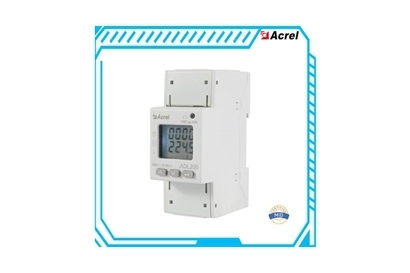
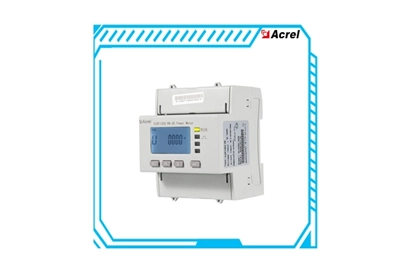
Modern backflow prevention systems, such as the Acrel ADL200N-CT/D16-WF, have a response time of only 50ms, enabling them to capture voltage and current changes in real time.
Acrel ADL200W-CT: Technology and Innovation
This smart meter is primarily designed for new energy power generation systems such as photovoltaic grid-connected systems, micro-inverter systems, energy storage systems, and AC-coupled systems.
It boasts advantages such as high accuracy, small size, fast response speed, and easy installation.
Compared to traditional anti-backflow meters, the ADL200W-CT series offers several revolutionary advantages:
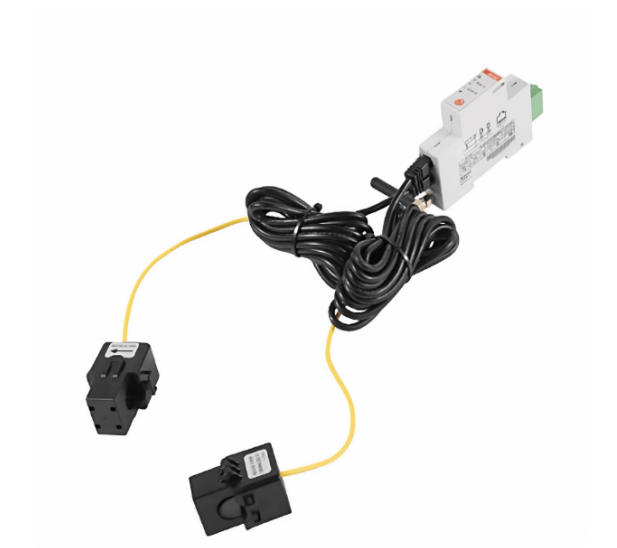
* Compact Structure: 1P, 18mm standard DIN rail design, supporting four application scenarios: single-phase, two-phase, three-phase, and two-phase three-phase.
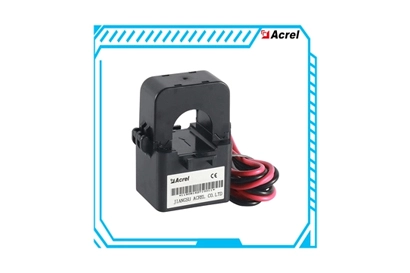
* Plug-in Current Transformer: The transformer adopts an integrated design with an RJ11 interface. It features plug-in installation with three-phase yellow-green-yellow color differentiation, reducing the risk of current misalignment, reverse wiring, and other wiring abnormalities.
* Rapid Electrical Parameter Updates: Real-time capture of voltage and current changes, updated every 50ms.
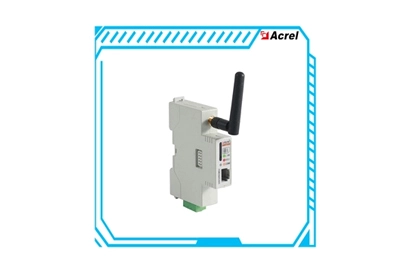
* Wireless Communication: Supports RS485 and WF communication; RS485 supports Modbus protocol. WIFI communication supports Modbus TCP or HTTP server protocols.
Installation and application: From complex to simple.
Aaron Shi
Electrical Engineer Expert, Providing Service, consultant, product expert, professional manufacturer of energy efficiency management systemic solutions, and energy meters.