E-mail Us

Demand Monitoring and Management

Dec 08, 2025

Table of Content [Hide]

    Explanation of the concept of demand

    Demand typically refers to a user's average rate of electricity consumption over a specific period. It is usually measured in kilowatts (kW) or megawatts (MW), representing the average power consumption level a user reaches within a specified time period (e.g., 15 minutes, 30 minutes, or 1 hour, which is the demand cycle). It reflects the instantaneous demand of users on the power system.

    Maximum demand refers to the maximum average power consumption a user generates within a specific time period (demand cycle) over a certain billing cycle (usually one month). This specific time period is typically 15 minutes, but may vary depending on the power company and regional regulations, and could be 30 minutes or 1 hour.


    Implementation of demand monitoring

    Our meter's demand monitoring function is basically tied to the optional F function; if F is available, then demand is available.

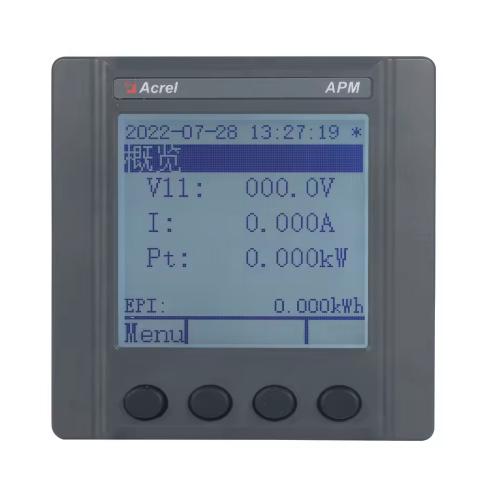
    Acrel APM series network power meters feature demand measurement capabilities, enabling real-time monitoring and recording of demand data in the power system, providing support for electricity management and energy efficiency analysis.


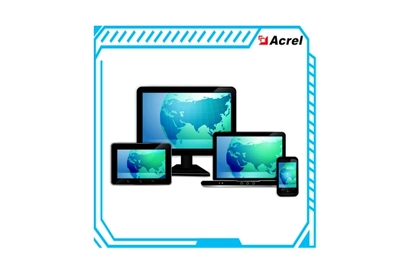
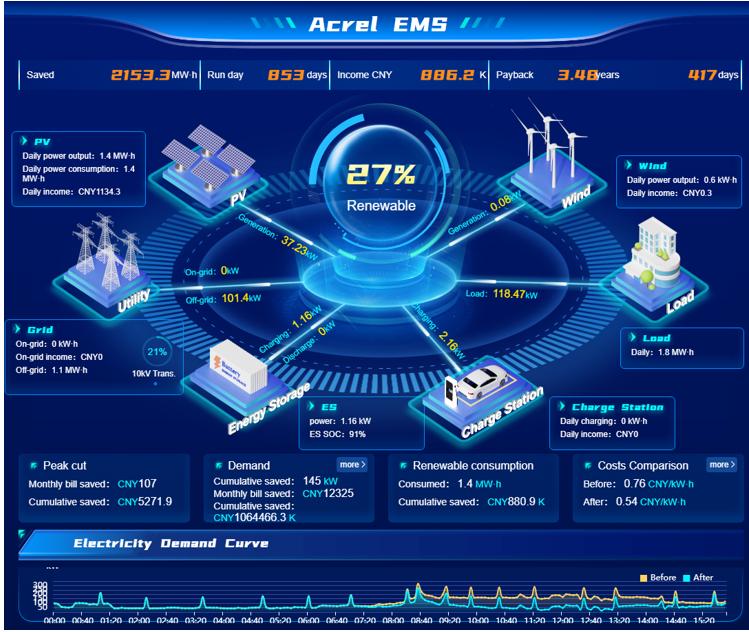
    Demand_Function_Overview.jpg

    Demand Function Overview


    The demand measurement functions of APM meters mainly include:

    Real-time Demand Calculation: The meter can continuously measure real-time demand parameters such as three-phase current, active power, and reactive power, and supports demand period settings (e.g., 15 minutes, 30 minutes, etc.) to adapt to different metering needs.

    Extreme Demand Recording: In addition to real-time demand, the meter can also record extreme demand parameters (including maximum and minimum values) such as current, voltage, and power, with timestamps for easy analysis of load peaks and troughs.

    Maximum Demand Statistics: Some models support maximum demand recording, which can be used for time-of-use billing or assessing the highest load level of electrical equipment. Technical Features

    High-Precision Measurement: The APM meter's demand measurement accuracy reaches 0.2S or 0.5S level, ensuring an error control within ±0.2% across the entire measurement range (including under low load), meeting the high-precision metering requirements of industrial and commercial applications.

    Data Storage and Protection: Employing a power failure protection circuit, demand data is not lost during power outages and recording resumes after power is restored.

    Communication and Integration: Demand data can be uploaded to the monitoring system via protocols such as RS485, Modbus-RTU, or Ethernet for convenient remote viewing and analysis.


    Application Scenarios

    Demand measurement functionality is particularly important in the following areas:

    Industrial Power Management: By monitoring equipment demand, production scheduling can be optimized to avoid overload operation.


    Energy Audit and Sub-metering: In scenarios such as buildings and industrial parks, combined with power quality analysis, refined energy consumption management can be achieved.


    Power Grid Quality Monitoring: Demand data can assist in diagnosing issues such as voltage sags and harmonics, improving power supply reliability.


    The Logic of Demand Management

    Essentially, it's about reducing power consumption, which means reducing the large loads used at the same time and distributing them across different time periods.


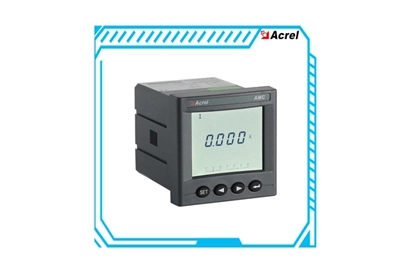
    APM520.jpg


    APM520+AWT+EIOT


    Standard Scheme

    The tentative plan is to use APM520 for demand monitoring and management in regions such as Malaysia. Note that this is a specialized program; the gateway and platform can be customized. Its key feature is that demand is segmented by rate-based time periods.

    Demand requirements vary in other regions, and can be selected based on needs. Regular demand is not subject to rate periods.


    Aaron Shi
    Aaron Shi

    Electrical Engineer Expert, Providing Service, consultant, product expert, professional manufacturer of energy efficiency management systemic solutions, and energy meters.

    References