I.Operational Requirements of Communication Base Stations: Power Supply System is the Core Guarantee
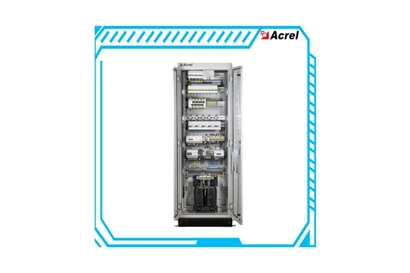
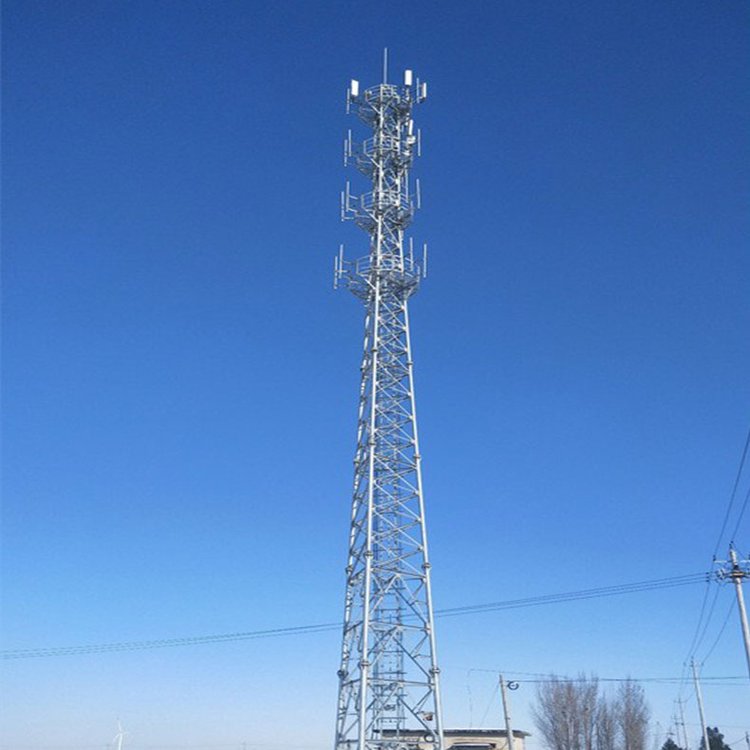
As a crucial relay station for mobile network signal transmission and reception, communication base stations support various mobile network services such as daily calls, video browsing, information transmission, and navigation positioning. They are the core infrastructure ensuring smooth mobile communication. Their stable operation is directly related to the normal conduct of people's daily lives and socio-economic activities, which places stringent requirements on the stability, reliability, and security of the base station power supply system.
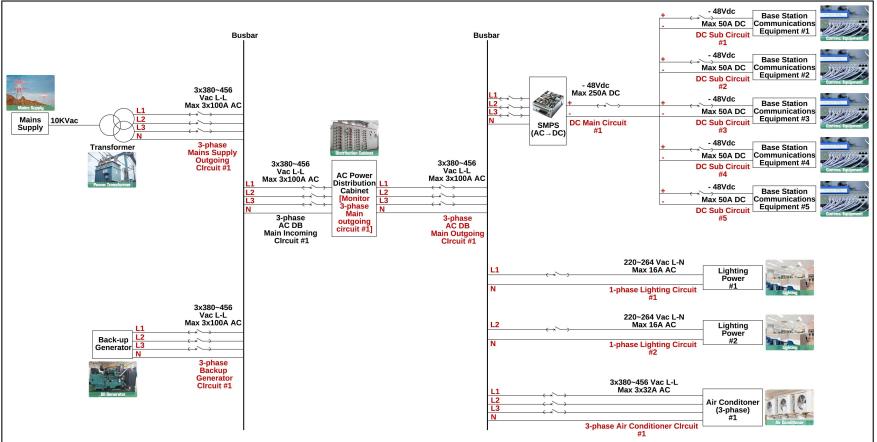
The base station power supply system consists of an AC power supply system and a DC power supply system. The DC power supply system has a built-in battery pack, and its core function is to provide temporary emergency power to the base station's core communication equipment when mains power is interrupted, ensuring uninterrupted communication services.
II. Dual Drivers of Policy and Demand: Photovoltaic Energy Storage Upgrades for Base Stations Become a Trend
With the iterative upgrades of communication technology, traditional battery packs, which only have the single function of emergency power supply, are gradually becoming insufficient to meet the diversified needs of current base stations. At the same time, the vigorous promotion and widespread application of clean energy technologies such as photovoltaics and energy storage have provided a feasible path for the upgrading of base station power supply systems, making photovoltaic energy storage systems an important direction for base station development. Policy also provides clear guidance and strong support for this trend.
III. Key Operational Requirements for Photovoltaic Energy Storage Systems in Base Stations: Backflow Prevention Compliance
During the actual operation of photovoltaic energy storage systems in communication base stations, strict compliance with backflow prevention and other relevant requirements is essential. Backflow refers to the phenomenon where, when the power generation of the photovoltaic + energy storage system exceeds the real-time power load of the base station, excess electricity flows back into the public power grid in the opposite direction to the conventional power supply. This phenomenon violates relevant grid connection specifications.
GB/T 43526-2023, "Technical Regulations for User-Side Electrochemical Energy Storage Systems Connected to Distribution Networks," explicitly requires that user-side electrochemical energy storage systems that do not allow backflow into the grid must have reverse power protection at their point of common coupling (PCC). This regulation sets a clear standard for the backflow prevention design and equipment selection of base station photovoltaic energy storage systems.
IV. DTSD1352 Anti-Backflow Energy Meter: A Core Solution for Adaptable Scenarios
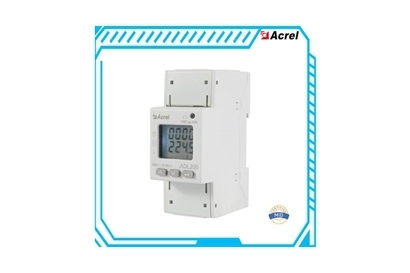
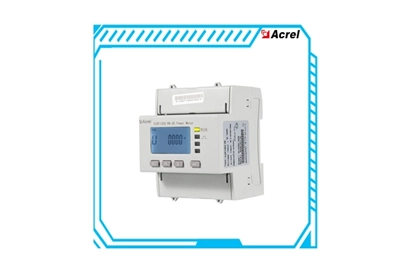
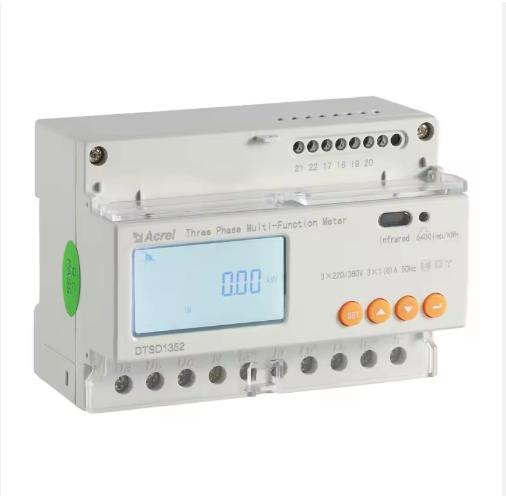
To meet the anti-backflow compliance requirements of photovoltaic grid-connected communication base station solar-storage systems, Acrel's DTSD1352 anti-backflow energy meter can be matched to specific scenario needs, providing reliable assurance for compliant system operation.
For photovoltaic-storage communication base station solar-storage systems connected to the AC grid, the DTSD1352 anti-backflow energy meter is installed at the common connection point between the base station and the grid. Its power measurement refresh rate can reach 100ms, enabling rapid detection of backflow phenomena and timely coordination with the solar-storage system to achieve anti-backflow control, ensuring system operation complies with grid access specifications.
Furthermore, global communication base stations consume a significant amount of energy, making cost reduction and efficiency improvement crucial for base station operations. Energy storage systems can leverage peak-valley electricity price differences for arbitrage, charging at low prices during off-peak hours and discharging at high prices during peak hours, effectively reducing base station electricity costs. The DTSD1352 anti-reverse current energy meter boasts powerful multi-rate metering capabilities, supporting up to 14 time zones, 8 time periods, 14 daily time periods, and 8 rates. It can flexibly adapt to the increasingly complex and diverse multi-rate pricing requirements of various provinces and cities, providing data support for base station energy consumption statistics and cost accounting.
V. Conclusion:
Acrel DTSD1352 Anti-Backflow Energy Meter, with its core advantages such as rapid power refresh and comprehensive multi-rate functionality, perfectly meets the compliant operation and cost reduction/efficiency improvement needs of photovoltaic energy storage systems in communication base stations. Driven by both policy guidance and the pressure of high-energy-consumption operations, this meter provides a reliable anti-backflow solution for the photovoltaic energy storage transformation of communication base stations, effectively helping base stations achieve green energy saving, safe and compliant operation, and promoting the optimization and upgrading of the energy structure in the communications industry.
Aaron Shi
Electrical Engineer Expert, Providing Service, consultant, product expert, professional manufacturer of energy efficiency management systemic solutions, and energy meters.