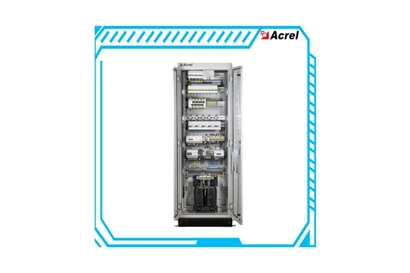
Data center operators in 2026 are navigating a convergence of pressures that make accurate power measurement more critical than it has ever been. AI and HPC workloads are driving rack power densities to levels that were considered extreme just three years ago. Electricity prices are rising across every major data center market. Colocation customers are demanding transparent, auditable power allocation as a contractual requirement rather than a courtesy. And sustainability reporting frameworks are requiring defensible energy data that cannot be produced from estimates or monthly utility bills.
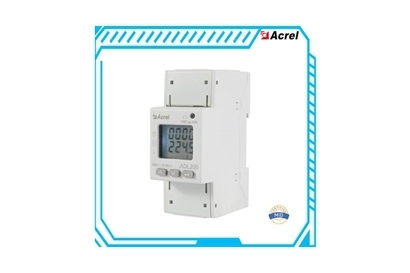
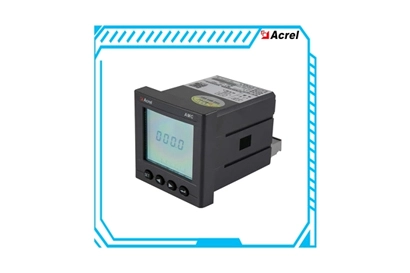
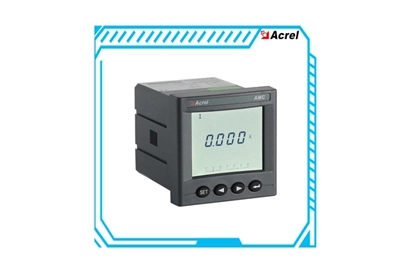
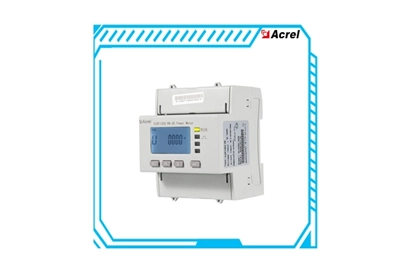
At the center of all these challenges is a single operational capability: knowing exactly how much power is flowing through every critical layer of the facility—utility incomer, UPS input and output, cooling plant, PDU feeders, server racks, and tenant branch circuits—at the resolution and accuracy needed to calculate PUE, allocate costs, and identify inefficiencies before they become financial liabilities. A high-precision 3 phase energy meter is the instrument that makes this capability real. The Acrel ADL 3000 is designed for exactly this application: Class 0.5 active energy accuracy, three-phase parameter measurement including optional 2nd–31st harmonic analysis, RS485/Modbus-RTU communication for EMS/BMS/DCIM integration, multi-tariff and demand recording, and a compact form factor that fits standard distribution panels and DIN-rail enclosures. The sections below explain how to deploy it effectively across the data center power chain.
Why High-Precision 3 Phase Metering Is the Foundation of Data Center PUE Optimization
PUE—Power Usage Effectiveness—is calculated as total facility energy divided by IT equipment energy. A PUE of 1.0 represents theoretical perfection; every watt entering the facility goes directly to IT load. Real facilities range from approximately 1.2 (highly efficient hyperscale) to 2.0 or higher (older, less optimized facilities). The difference between a PUE of 1.4 and 1.6 on a 10 MW facility represents approximately 2 MW of wasted power—at current electricity prices, a multi-million dollar annual cost difference.
The measurement problem that prevents PUE optimization:
PUE cannot be calculated accurately without accurate measurement at both the facility level (total energy in) and the IT load level (energy consumed by servers, storage, and networking). If either measurement is inaccurate, the PUE figure is inaccurate—and optimization decisions based on inaccurate PUE data lead to misallocated capital and missed efficiency opportunities.
The 2026 pain points that make this urgent:
AI and HPC racks create fast-changing, high-density load profiles that make static estimates unreliable within hours of a configuration change
UPS and cooling losses must be separated from IT load to identify where efficiency improvements will have the greatest impact
Colocation tenants require transparent power allocation that can withstand audit scrutiny—estimated figures are no longer acceptable
Sustainability reporting under frameworks such as GHG Protocol and CDP requires defensible energy data with documented measurement methodology
Manual meter reading is too slow and too inaccurate for real-time PUE dashboards and operational optimization
Where metering is needed in a data center power chain:
PDU feeders and server rack circuits (IT load by zone or tenant)
Backup generator and ATS outputs (resilience monitoring)
Tenant branch circuits (colocation billing)
Each of these measurement points requires a meter that can handle three-phase power, communicate with the facility's monitoring platform, and provide the accuracy needed for billing and PUE calculation.
How ADL 3000 Measures IT, UPS, and Cooling Power for PUE Accuracy
The ADL 3000 operates as a three-phase smart energy meter that simultaneously measures energy accumulation and real-time electrical parameters—providing both the billing data and the operational visibility that data center teams need.
The measurement chain:
Three-phase voltage and current inputs are measured continuously. The meter calculates instantaneous active power (W), reactive power (VAr), apparent power (VA), power factor, and frequency for each phase and for the three-phase total. Active energy (kWh) and reactive energy (kVArh) are accumulated by integrating instantaneous power over time. Phase-level active energy (A/B/C phase positive active kWh) is recorded separately, enabling phase imbalance analysis and per-phase cost allocation.
The accuracy specification that matters for data centers:
The ADL 3000 is available in Class 0.5 active energy accuracy—meaning the measurement error on kWh is within ±0.5% across the rated operating range. For a data center metering point handling 1 MW of load, Class 0.5 accuracy means the measurement error is within ±5 kW. Over a month of continuous operation, this translates to a billing accuracy of within ±3,600 kWh on approximately 720,000 kWh of consumption—a level of precision that supports both colocation billing and PUE calculation with defensible accuracy.
The harmonic measurement capability:
The ADL 3000 supports optional 2nd–31st voltage and current harmonic measurement. In data centers where server power supplies, UPS systems, and variable-frequency drives generate significant harmonic content, harmonic monitoring provides early warning of power quality issues that can affect equipment reliability, increase transformer losses, and distort energy measurements in meters that do not account for harmonic content.
The PUE calculation workflow:
With ADL 3000 meters installed at the utility incomer and at each IT load distribution point, the facility management system can calculate PUE in real time by dividing the incomer kW reading by the sum of IT load kW readings. Cooling and UPS losses appear as the difference between total facility power and IT load power—providing the granular visibility needed to identify which system is contributing most to PUE degradation and where efficiency investments will have the greatest impact.
Key Specifications: Why ADL 3000 Fits High-Precision Data Center Metering
Complete Technical Specification
Specification
ADL 3000 Capability
Data Center Application
Wiring system
3P3W / 3P4W
Covers standard LV distribution architectures
Reference voltage
3×100V, 3×380V, 3×57.7/100V, 3×220/380V
Supports multiple electrical system designs
Current input
3×1(6)A via external CTs; or 3×10(80)A direct
Covers high-current feeders and branch circuits
Active energy accuracy
Class 0.5 or Class 1
Class 0.5 for billing and PUE; Class 1 for monitoring
Reactive energy accuracy
Class 2
Supports power factor analysis
Power measurement error
±0.5% (active/reactive/apparent)
Supports operational efficiency analysis
Harmonic measurement
Optional 2nd–31st voltage and current harmonics
Power quality monitoring in high-harmonic environments
Communication
RS485, Modbus-RTU
Integrates with EMS, BMS, DCIM, gateways
Modbus address range
1–247
Supports large multi-meter networks
Baud rate
1200–19200 bps
Flexible integration with different platform speeds
Supports peak demand analysis and capacity planning
Phase-level energy
A/B/C phase positive active kWh
Supports phase imbalance analysis
The Class 0.5 accuracy advantage for colocation billing:
Colocation contracts typically specify power allocation in kW increments with monthly kWh billing. A Class 1 meter on a 100 kW tenant circuit introduces a potential billing error of ±1 kW—over a month, this represents ±720 kWh of billing uncertainty. A Class 0.5 meter reduces this to ±360 kWh. For tenants paying $0.10–0.15/kWh, the difference between Class 0.5 and Class 1 accuracy represents $36–54 per month per circuit in potential billing dispute exposure—a figure that compounds across dozens of tenant circuits and justifies the Class 0.5 specification.
Application Scenarios: ADL 3000 Deployment Across the Data Center Power Chain
Utility Incomer and Main Distribution The facility-level PUE numerator requires accurate measurement of total power entering the facility. ADL 3000 meters at the main incomer provide the total kW and kWh data that forms the basis of PUE calculation, sustainability reporting, and utility cost allocation. Class 0.5 accuracy at this level ensures that the PUE denominator is calculated from a defensible measurement baseline.
UPS Input and Output Monitoring UPS efficiency is calculated by comparing input energy (from the utility or generator) with output energy (delivered to IT load). ADL 3000 meters on both sides of each UPS system provide the data needed to calculate conversion efficiency, identify UPS units that are operating below specification, and quantify the energy cost of UPS losses. For a 1 MW UPS operating at 94% efficiency, the 60 kW of conversion loss represents approximately $52,000 per year at $0.10/kWh—a figure that justifies both the metering investment and the efficiency upgrade analysis.
Cooling System Energy Tracking Cooling typically represents 30–40% of total data center energy consumption. Separating cooling energy from IT load requires individual metering of chillers, cooling towers, pumps, CRAH/CRAC units, and cooling auxiliaries. ADL 3000 meters on each cooling circuit provide the granular data needed to calculate the cooling energy ratio (CER), identify inefficient cooling equipment, and evaluate the impact of cooling optimization measures such as economizer operation, hot/cold aisle containment, and setpoint adjustments.
Colocation Tenant Billing Colocation tenants who pay for power based on metered consumption require billing data that is accurate, auditable, and produced by a meter with a recognized accuracy class. ADL 3000 Class 0.5 meters on tenant branch circuits provide the kWh and demand data needed for monthly billing statements, with data freeze records that support dispute resolution and audit review. The multi-tariff function allows operators to implement peak/valley pricing that aligns tenant billing with the facility's actual electricity cost structure.
Rack-Level and PDU Feeder Metering For high-density AI and HPC deployments where individual rack power consumption can exceed 20–30 kW, rack-level or PDU-feeder metering provides the granular IT load data needed for accurate PUE calculation and per-rack cost allocation. ADL 3000 meters on PDU feeders allow facility teams to track IT load by zone, row, or tenant—providing the data foundation for capacity planning, power density management, and chargeback billing.
Power Quality Monitoring In data centers with high concentrations of switching power supplies, UPS systems, and variable-frequency drives, harmonic distortion can increase transformer losses, cause neutral conductor overloading, and distort energy measurements. The ADL 3000's optional 2nd–31st harmonic measurement provides early warning of power quality issues that affect both equipment reliability and energy efficiency—allowing facility teams to address harmonic problems before they cause equipment failures or measurement errors.
Installation, Selection, Maintenance, and TCO: Deploying ADL 3000 in Data Center Projects
Selection and Deployment Workflow
Step 1 — Define the monitoring layer and measurement objective. PUE calculation requires meters at the facility incomer and IT load distribution points. Colocation billing requires meters at tenant branch circuits. UPS efficiency analysis requires meters at UPS input and output. Cooling optimization requires meters at each major cooling circuit. Define the objective before selecting the meter configuration.
Step 2 — Choose wiring mode. 3P4W (three-phase four-wire) for systems with neutral conductor; 3P3W (three-phase three-wire) for delta-connected systems without neutral. Confirm the distribution system design before specifying the meter wiring mode.
Step 3 — Select current input type. External CT input (3×1(6)A) for high-current feeders where the meter is installed in a panel with existing CTs; direct connection (3×10(80)A) for smaller monitored circuits where direct wiring is practical. Confirm CT ratio and polarity before commissioning.
Step 4 — Specify accuracy class. Class 0.5 for colocation billing, PUE calculation, and any application where measurement accuracy directly affects financial transactions or sustainability reporting. Class 1 for general monitoring and operational visibility where billing accuracy is not the primary requirement.
Step 5 — Plan the RS485 communication network. Assign unique Modbus addresses (1–247) to each meter. Use shielded twisted pair conductors for RS485 wiring. Configure baud rate, parity, and protocol through the meter's parameter settings. Connect to the EMS, BMS, DCIM, or Acrel gateway at the appropriate network topology point.
Step 6 — Configure multi-tariff and demand recording. Program time zones, tariff rates, and time-period lists to align with the facility's electricity tariff structure and colocation billing policy. Confirm that the data freeze and demand record functions are enabled for audit and billing review purposes.
Step 7 — Commission and validate. Verify CT ratio, phase sequence, Modbus address, baud rate, load reading against a reference measurement, and platform data mapping. Document the commissioning results for the facility's metering qualification record.
Maintenance and TCO Advantages
Reduced manual reading labor from RS485/Modbus integration eliminates the need for physical meter reading across potentially hundreds of metering points—a significant operational saving for large data center facilities.
Better PUE visibility and optimization speed from real-time three-phase parameter data allows facility teams to identify PUE degradation events within minutes rather than discovering them in monthly reports—enabling faster corrective action and lower cumulative energy waste.
Fairer colocation billing from Class 0.5 accuracy and data freeze records reduces billing disputes and the administrative cost of dispute resolution—improving tenant relationships and reducing the legal and commercial risk of billing inaccuracies.
Earlier fault identification from power quality monitoring and abnormal parameter detection reduces the probability of equipment failures caused by harmonic distortion, phase imbalance, or power factor degradation—lowering maintenance cost and improving facility reliability.
Stronger justification for efficiency investments from accurate baseline measurement and trend data allows facility teams to quantify the energy savings from cooling optimization, UPS upgrades, and power factor correction—improving the business case for capital investment and accelerating approval cycles.
Conclusion
Accurate PUE optimization, transparent colocation billing, and defensible sustainability reporting in 2026 all depend on the same foundation: high-precision metering at every critical layer of the data center power chain. The Acrel ADL 3000 provides Class 0.5 active energy accuracy, three-phase parameter measurement, optional 2nd–31st harmonic analysis, RS485/Modbus-RTU communication, multi-tariff and demand recording, and data freeze capability—in a compact form factor that fits standard distribution panels and DIN-rail enclosures. For data center operators who need to move from monthly estimates to real-time power visibility, the ADL 3000 is the 3 phase energy meter that makes this transition practical and cost-effective.
Visit the Acrel ADL 3000 product page to request a recommended data center metering configuration and quotation.
Please submit the following details for an accurate recommendation:
Work condition: Data center type (colocation/enterprise/hyperscale), UPS topology, cooling architecture, indoor panel or cabinet environment, number of metering points
Quantity: Number of incomers, UPS circuits, cooling circuits, PDU or rack feeders, tenant branch circuits
Size/spec: 3P3W or 3P4W wiring, voltage system, current range, CT ratio, accuracy class (0.5 or 1), DIN-rail or panel space, RS485 communication topology, gateway or EMS platform type
Target metrics: PUE target and calculation methodology, billing accuracy requirement, demand monitoring, harmonic visibility, Modbus data refresh rate, audit record retention
Current problems: Unclear or inaccurate PUE, manual meter reading burden, colocation tenant billing disputes, high cooling energy without visibility, UPS loss uncertainty, poor rack-level power allocation, sustainability reporting data gaps
FAQ
1. What is a 3 phase energy meter?
An electrical measurement device that records energy consumption and electrical parameters in a three-phase power system, including active energy (kWh), reactive energy (kVArh), voltage, current, active power, reactive power, apparent power, power factor, frequency, and demand. In data centers, three-phase energy meters are deployed at utility incomers, UPS systems, cooling circuits, PDU feeders, and tenant branch circuits to support PUE calculation, cost allocation, and billing.
2. ADL 3000 vs. ordinary kWh meter: which is better for data centers?
An ordinary kWh meter provides basic energy totals without communication capability or parameter measurement. The ADL 3000 adds Class 0.5 accuracy, three-phase parameter measurement, optional harmonic analysis, RS485/Modbus-RTU communication, multi-tariff recording, demand data, and data freeze capability—all of which are required for PUE calculation, colocation billing, and integration with EMS/BMS/DCIM platforms. For data center applications, the ADL 3000's capabilities are not optional enhancements—they are the baseline requirements for accurate power management.
3. What is the ROI of high-precision data center power meters?
ROI comes from better PUE optimization (reducing energy waste and electricity cost), fairer colocation billing (reducing disputes and improving tenant relationships), faster fault identification (reducing equipment failure risk and maintenance cost), more accurate justification for efficiency investments (improving capital allocation), and defensible sustainability reporting (reducing compliance risk and improving ESG credibility).
4. Does ADL 3000 require major electrical redesign?
No major redesign is required if the distribution panel has space for the meter and CT access is available for the monitored circuits. Commissioning must verify wiring mode (3P3W/3P4W), CT ratio and polarity, phase sequence, Modbus address, baud rate, and platform data mapping. For new data center construction, metering points should be designed into the electrical distribution layout from the outset to minimize retrofit complexity.
5. What parameters are needed for correct selection and quotation?
Voltage system and wiring mode (3P3W/3P4W), circuit current and CT ratio, number of metering points by layer (incomer/UPS/cooling/PDU/tenant), accuracy class requirement (0.5 or 1), harmonic monitoring requirement, RS485 communication topology, EMS/BMS/DCIM integration method, multi-tariff and billing requirements, data retention requirement, and current problems such as PUE inaccuracy, billing disputes, or sustainability reporting gaps.
Aaron Shi
Electrical Engineer Expert, Providing Service, consultant, product expert, professional manufacturer of energy efficiency management systemic solutions, and energy meters.