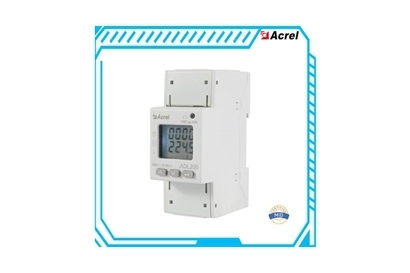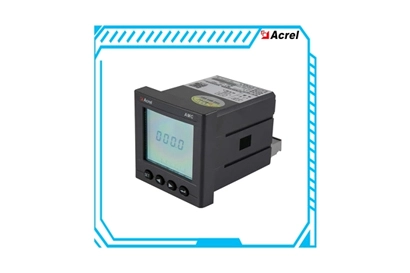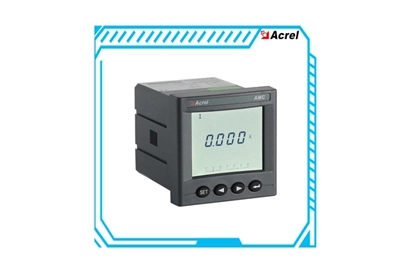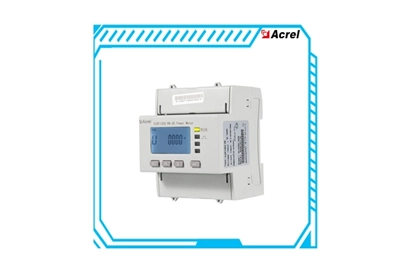
Factories, commercial buildings, EV charging sites, data centers, and distributed energy projects in 2026 share a common operational risk that basic kWh billing cannot detect: three-phase imbalance. When voltage or current distribution across the three phases of an AC power system becomes uneven—caused by asymmetric single-phase loads, unequal load growth across phases, or equipment faults—the consequences accumulate silently until they become expensive. Motors run hotter than their thermal ratings, reducing insulation life and increasing failure probability. Transformers experience elevated copper losses that waste energy and accelerate aging. Neutral conductors in 3P4W systems carry excess current that creates fire risk. And nuisance trips on overcurrent protection devices interrupt production at the worst possible moments.
The problem is not that these conditions are undetectable—it is that a standard kWh meter provides no visibility into them. A modern three phase meter such as the Acrel ADL400 changes this by combining energy measurement with real-time power quality monitoring, phase-level parameter visibility, harmonic analysis, and RS485/Modbus-RTU communication for integration with EMS and BMS platforms. For engineers responsible for electrical system diagnostics and operational reliability, the ADL400 is not a billing device—it is a diagnostic instrument that enables proactive three phase load balancing and predictive maintenance.
How a Three Phase Meter Enables Power Quality Monitoring Beyond kWh
A traditional kWh meter answers one question: how much energy was consumed? A smart digital energy meter answers a fundamentally different set of questions: what is happening in the electrical system right now, and is it normal?
The ADL400 measures and displays a comprehensive set of electrical parameters simultaneously:
Voltage (U): per-phase and line-to-line voltage, enabling detection of voltage deviation, sag, swell, and unbalance
Current (I): per-phase current, enabling detection of overload, underload, and phase imbalance
Active power (P): real power consumption in kW, per phase and total
Reactive power (Q): reactive power in kVAr, indicating inductive or capacitive load behavior
Apparent power (S): total volt-ampere demand
Power factor (PF): ratio of active to apparent power, indicating efficiency of power utilization
Frequency (F): supply frequency, with deviation indicating grid instability or generator issues
Harmonics: 2nd through 31st voltage and current harmonics, identifying distortion from non-linear loads
Each of these parameters tells a different story about the health of the electrical system. Voltage deviation indicates supply quality problems or excessive voltage drop under load. Current imbalance between phases indicates uneven load distribution. Poor power factor indicates reactive power demand that increases apparent current and transformer loading without contributing to useful work. Harmonic distortion from variable-frequency drives, switching power supplies, and UPS systems increases RMS current, causes additional heating in motors and transformers, and can interfere with protection relay operation.
The ADL400 makes all of these parameters visible in real time on its LCD display and transmits them continuously via RS485/Modbus-RTU to monitoring platforms—converting what was previously invisible electrical behavior into actionable operational data.
Using ADL400 Data for Three Phase Load Balancing and Electrical System Diagnostics
The diagnostic value of a three phase meter lies in the comparison between phases. A balanced three-phase system has equal voltage and current on all three phases. Deviation from balance is the primary indicator of a problem that needs attention.
The phase imbalance diagnostic workflow:
Step 1 — Compare per-phase current readings. If Phase A is carrying 85A while Phase B carries 60A and Phase C carries 45A, the system has significant current imbalance. The overloaded phase (A) is at risk of nuisance tripping, while the underloaded phases represent unused capacity. The corrective action is to redistribute single-phase loads from Phase A to Phases B and C.
Step 2 — Compare per-phase voltage readings. Voltage imbalance—where the three phase voltages differ by more than 1–2%—causes disproportionately large current imbalance in three-phase motors. A 2% voltage imbalance can cause 6–10% current imbalance in an induction motor, significantly increasing winding temperature and reducing motor life. Identifying voltage imbalance early allows engineers to investigate the supply quality or load distribution before motor damage occurs.
Step 3 — Monitor power factor trends. A declining power factor on a specific feeder indicates increasing reactive power demand—typically from inductive loads such as motors, transformers, and fluorescent lighting ballasts. Poor power factor increases the apparent current drawn from the supply, loading cables and transformers beyond their active power contribution. Identifying the feeder with the worst power factor allows targeted power factor correction investment.
Step 4 — Check harmonic content. High harmonic distortion on current waveforms—particularly 3rd, 5th, and 7th harmonics—indicates significant non-linear load content. In 3P4W systems, triplen harmonics (3rd, 9th, 15th) add in the neutral conductor rather than canceling, creating neutral overcurrent risk. Identifying high harmonic content allows engineers to evaluate harmonic filtering, load segregation, or transformer derating requirements before equipment damage occurs.
The operational benefits of proactive three phase load balancing:
Reduced neutral current in 3P4W systems, lowering fire risk and cable heating
Lower transformer copper losses from more even current distribution across phases
Reduced motor winding temperature from balanced voltage and current, extending insulation life
Lower peak demand charges from better load distribution across phases
Fewer nuisance trips from overloaded phase protection devices
Key Specifications of the ADL400 Smart Digital Energy Meter
Complete Technical Specification
Specification
ADL400 Value
Application Relevance
Wiring system
3P3W / 3P4W
Covers standard industrial and commercial distribution
Rated voltage
Multiple options: direct connect and PT-based
Supports LV and MV metering with appropriate PTs
Rated current
3×10(80)A direct; 3×1(6)A via external CTs
Covers branch circuits and high-current feeders
Active energy accuracy
Class 0.5
Supports billing and high-precision monitoring
Reactive energy accuracy
Class 2
Supports power factor analysis
Frequency range
45–65 Hz
Covers standard AC systems and generator supplies
Harmonic measurement
2nd–31st voltage and current harmonics
Power quality analysis for non-linear load environments
Communication
RS485, Modbus-RTU
Integrates with EMS, BMS, SCADA, gateways
Display
LCD with backlight
Local parameter readout without platform access
Multi-tariff
Optional: 4 time zones, 4 tariff rates
Supports peak/valley billing and cost allocation
Data freeze
Optional: historical data records
Supports billing audit and dispute resolution
Demand recording
Maximum demand and occurrence time
Supports peak demand analysis
Installation
35mm DIN rail
Fits standard distribution panels and enclosures
Configuration parameters that must be set during commissioning:
CT ratio: must match the installed current transformers to ensure accurate current and energy measurement
PT ratio: must match the installed voltage transformers if PT-based voltage input is used
Wiring mode: 3P3W or 3P4W must be correctly selected to match the distribution system
Modbus address: unique address (1–247) must be assigned to each meter on the RS485 bus
Baud rate: must match the gateway or EMS platform communication speed
Tariff schedule: time zones and tariff rates must be programmed to match the billing policy
Engineers should follow theAcrel ADL400 manual and installation documentation for wiring diagrams, parameter setting procedures, and communication commissioning steps. Acrel provides an ADL400 installation and operation instruction PDF on the product page, and its support center includes installation manual resources for the ADL400 and related products.
Application Scenarios: Where a Three Phase Meter Delivers Diagnostic Value
Manufacturing Plants Motors, compressors, conveyors, CNC equipment, and production line feeders are the primary sources of three-phase imbalance in manufacturing environments. ADL400 meters on motor control center (MCC) feeders and production line distribution boards provide the per-phase current and voltage data needed to identify overloaded phases, detect motor power factor degradation, and monitor harmonic distortion from variable-frequency drives. Early detection of imbalance allows load redistribution before motor failures cause production downtime.
Commercial Buildings HVAC systems, elevators, lighting circuits, and tenant loads in commercial buildings create complex and variable three-phase loading patterns. Single-phase tenant loads—office equipment, lighting, small appliances—are rarely distributed evenly across phases, creating persistent imbalance that increases transformer losses and neutral current. ADL400 meters on tenant distribution boards and main distribution panels provide the visibility needed to identify and correct imbalance during building commissioning and ongoing operations.
Data Centers Server rack loads, UPS systems, and cooling equipment in data centers create high-density three-phase loading that must be carefully balanced to avoid overloading individual phases and PDU circuits. ADL400 meters on PDU feeders and distribution panels provide real-time phase loading data that allows data center operations teams to redistribute rack loads and maintain balanced utilization across all three phases.
EV Charging Stations Three-phase EV chargers draw high, variable currents that can create significant phase imbalance if multiple chargers are not evenly distributed across phases. ADL400 meters on charging station distribution boards provide the per-phase current data needed to identify uneven charger distribution and optimize load allocation across phases.
Solar PV and Microgrid Systems Grid-connected solar PV systems and microgrids require monitoring of both import and export energy, power factor, and power quality at the point of common coupling. ADL400 meters provide the bidirectional energy measurement, power factor monitoring, and harmonic analysis needed to manage grid interaction and comply with utility interconnection requirements.
Utility and Sub-Metering Projects Multi-tenant buildings, industrial parks, and campus facilities that sub-meter individual tenants or departments need accurate three-phase energy data with communication capability for remote reading and billing. ADL400 Class 0.5 accuracy and RS485/Modbus-RTU communication support both accurate billing and centralized energy management across large meter populations.
Installation, Selection, and the Acrel ADL400 Manual for Lower TCO
Selection Checklist
System type: confirm 3P3W (three-phase three-wire, delta or ungrounded systems) or 3P4W (three-phase four-wire, star/wye systems with neutral). Incorrect wiring mode selection produces measurement errors that cannot be corrected without reconfiguration.
Voltage level: confirm whether direct voltage connection is appropriate or whether voltage transformers (PTs) are required. For LV systems (up to 400V line-to-line), direct connection is standard. For MV systems, PT-based input is required.
Current range: for circuits within the 10(80)A direct-connection range, direct wiring simplifies installation. For higher-current circuits, external CTs with 1(6)A secondary output are used. Confirm CT ratio and accuracy class before ordering.
Communication requirement: RS485/Modbus-RTU is the standard integration path for EMS, BMS, SCADA, and gateway platforms. Confirm the platform's Modbus register map compatibility with the ADL400 before commissioning.
Required functions: confirm whether multi-tariff, demand recording, data freeze, or harmonic measurement are required for the specific application. These functions affect the meter model selection and configuration.
Cabinet space: the ADL400's DIN-rail installation requires confirmation of available rail space and panel depth before specifying the installation layout.
Maintenance and TCO Advantages
Remote monitoring eliminates manual inspection labor. RS485/Modbus integration allows all electrical parameters to be read remotely at configurable intervals—eliminating the need for technicians to physically visit each meter location for routine data collection.
Early imbalance detection reduces downtime cost. Identifying a developing phase imbalance condition before it causes a motor failure or nuisance trip avoids the production downtime, emergency repair cost, and equipment replacement expense that reactive maintenance generates.
Better power factor management reduces energy waste. Monitoring power factor trends by feeder allows targeted power factor correction investment that reduces reactive power demand charges and lowers apparent current loading on cables and transformers.
Harmonic monitoring supports predictive maintenance. Tracking harmonic distortion trends over time allows engineers to identify when non-linear load growth is approaching the threshold where harmonic filtering or transformer derating becomes necessary—avoiding the reactive response to equipment failures caused by unmanaged harmonic distortion.
Accurate load data supports capacity planning. Per-phase current and demand data from ADL400 meters provides the factual basis for distribution system capacity planning—replacing conservative estimates with measured data and enabling more efficient use of existing electrical infrastructure.
Conclusion
A three phase meterin 2026 is not a billing device—it is a power quality monitoring and electrical system diagnostics instrument that helps engineers identify three-phase imbalance, poor power factor, harmonic distortion, and abnormal electrical conditions before they cause equipment failures, energy waste, and unplanned downtime. The Acrel ADL400 provides Class 0.5 active energy accuracy, per-phase voltage and current measurement, 2nd–31st harmonic analysis, RS485/Modbus-RTU communication, and optional multi-tariff and demand recording—in a DIN-rail form factor that fits standard distribution panels across manufacturing, commercial, data center, EV charging, and renewable energy applications.
Visit the Acrel ADL400 product page to request a recommended configuration and quotation.
Please submit the following details for an accurate recommendation:
Work condition: System type (3P3W/3P4W), voltage level, current range, installation environment (indoor panel, outdoor enclosure, cabinet), ambient temperature
Quantity: Number of metering points by application layer
Size/spec: CT ratio and accuracy class, PT ratio if applicable, DIN-rail space, RS485 communication topology, gateway or EMS platform type, required functions (harmonics, multi-tariff, demand, data freeze)
Target metrics: Monitoring accuracy class, communication data refresh rate, harmonic visibility, load balancing diagnostic capability, billing accuracy requirement
Current problems: Three-phase imbalance, motor overheating, transformer losses, poor power factor, harmonic distortion, nuisance trips, manual reading burden, lack of real-time electrical visibility
FAQ
1. What is a three phase meter?
An electrical meter used to measure power and energy in three-phase AC systems. A smart model like the ADL400 measures voltage, current, active power, reactive power, apparent power, power factor, frequency, and harmonics across all three phases—providing both billing data and the electrical parameter visibility needed for power quality monitoring, load balancing, and predictive maintenance.
2. How is a smart digital energy meter different from a standard kWh meter?
A standard kWh meter records accumulated energy consumption and displays it locally. A smart digital energy meter provides real-time per-phase electrical parameters, harmonic analysis, RS485/Modbus-RTU communication for platform integration, multi-tariff recording, demand data, and data freeze capability—converting the meter from a passive billing device into an active diagnostic instrument for electrical system management.
3. What is the ROI of using a three phase meter for load balancing?
ROI comes from reduced motor and transformer failures (avoiding emergency repair and replacement cost), lower energy losses from improved load distribution and power factor (reducing electricity cost), fewer nuisance trips (reducing production downtime), lower manual inspection labor (from remote monitoring), and more accurate capacity planning (avoiding premature infrastructure investment). Payback period depends on load size, operating hours, current imbalance severity, and the cost of failures being prevented.
4. Do I need to modify the existing electrical system to install an ADL400?
Not necessarily. For circuits within the 10(80)A direct-connection range, the ADL400 can be installed without external CTs. For higher-current circuits, external CTs are required but do not require modification of the monitored circuit—only the addition of CT cores around the conductors. Final installation requirements depend on site voltage, current, wiring type, cabinet space, and safety requirements. Engineers should follow the Acrel ADL400 manual for wiring and commissioning procedures.
5. What parameters should I provide for ADL400 selection?
System type (3P3W or 3P4W), supply voltage, circuit current and CT ratio, wiring method, communication requirement (RS485/Modbus-RTU, gateway type, EMS platform), installation space (DIN-rail dimensions, panel depth), required functions (harmonics, multi-tariff, demand recording, data freeze), quantity of metering points, target monitoring accuracy, and current problems such as three-phase imbalance, motor overheating, poor power factor, harmonic distortion, or transformer losses.
Aaron Shi
Electrical Engineer Expert, Providing Service, consultant, product expert, professional manufacturer of energy efficiency management systemic solutions, and energy meters.