E-mail Us

Key Features to Evaluate in a Din Rail Single Phase Energy Meter

Sep 20, 2026

Table of Content [Hide]

    A DIN rail energy meter may look like a relatively simple component inside a distribution cabinet, but choosing the right model requires more than checking whether it can record electricity consumption. In a commercial building, industrial control panel, or sub-metering application, the meter also needs to fit the electrical system, provide dependable measurements, communicate with other equipment when required, and remain stable under the conditions in which it will operate.

    This is where a din rail electric meter becomes more than a basic consumption counter. A well-selected meter can provide information about voltage, current, power, power factor, frequency, and energy consumption while also feeding data into a centralized monitoring system. For single-phase applications, a din rail single phase electronic energy meter can offer this functionality in a compact format that is convenient to install inside a distribution board.

    Acrel provides several DIN rail energy measurement solutions for different electrical monitoring requirements. The right choice ultimately comes down to how the meter will be used, what information needs to be collected, and how that information will be integrated into the wider electrical system.

    What Measurement Accuracy Should a Din Rail Single Phase Energy Meter Provide?

    Accuracy is one of the first specifications worth checking because energy data is only useful when it reflects the actual electrical conditions closely enough for its intended purpose. A meter used for basic energy monitoring does not necessarily need the same measurement performance as equipment used where energy accounting or more demanding metering requirements are involved.

    For general monitoring and sub-metering applications, Class 1 accuracy is commonly suitable. However, accuracy should always be considered together with the relevant measurement standard, current range, electrical conditions, and intended use rather than treated as an isolated number.

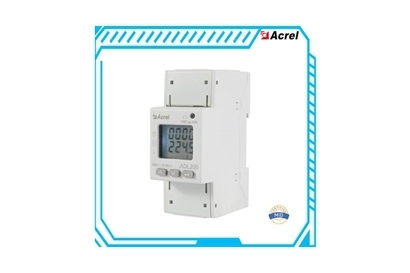
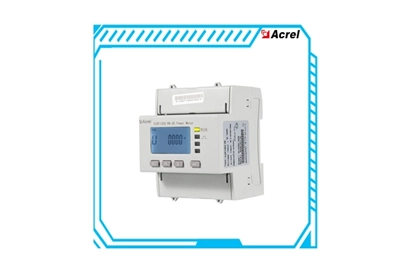
    For example, Acrel's ADL10-E single-phase DIN rail meter specifies Class 1 accuracy and is designed for energy measurement in low-voltage single-phase systems. Its specifications also reference IEC 62053-21 and IEC 62053-22, providing a clearer basis for assessing its measurement performance than a generic statement about “high accuracy.”

    For a din rail single phase electronic energy meter, it is therefore useful to look at the complete measurement specification. A meter with suitable accuracy but an unsuitable current range may still produce unsatisfactory results in the actual installation. Matching the meter to the expected electrical load is just as important as selecting the stated accuracy class.

    How Does DIN Rail Installation Affect Meter Selection?

    DIN rail mounting is particularly practical when several electrical components have to share limited cabinet space. Instead of requiring a dedicated mounting arrangement, the meter can be installed alongside circuit protection, control, and communication equipment on the same rail.

    Acrel's ADL10-E uses a standard 35 mm DIN rail mounting method, which makes it suitable for many conventional distribution and control cabinets. Its compact housing is also useful where energy measurement needs to be added without significantly changing the cabinet layout.

    Physical compatibility still deserves attention before an order is placed. The available width, terminal position, wiring direction, clearance, and accessibility of the display can all affect installation. A meter may technically fit a DIN rail while still being inconvenient to wire or read once the cabinet is fully assembled.

    The installation environment should also influence the selection. A din rail electric meter installed inside a clean indoor distribution board will face different conditions from one used in an industrial control cabinet exposed to greater temperature variation, humidity, or electrical interference. The enclosure and environmental specifications should therefore be compared with the actual project conditions rather than considered after the model has already been selected.

    Which Electrical Parameters Should a Single Phase Energy Meter Measure?

    Energy consumption is usually the starting point, but it is rarely the only information that matters in a modern monitoring system. Knowing how much electricity has been consumed tells an operator what happened; knowing the voltage, current, power, and power factor can provide more context about why the system is behaving that way.

    Depending on the model, a single-phase meter can monitor voltage, current, active power, reactive power, apparent power, power factor, frequency, active energy, and reactive energy. Acrel's ADL10-E, for instance, combines energy measurement with these electrical parameters, allowing the same device to serve both basic consumption monitoring and broader electrical-data collection.

    This distinction becomes useful in commercial and industrial applications. If the objective is simply to divide energy consumption among different circuits, kWh may be the primary concern. If the meter is being connected to an energy management platform, however, additional parameters can help identify changes in load, power factor, or operating conditions.

    That is why a din rail single phase electronic energy meter should be selected according to the information the monitoring system actually needs. Choosing a model with a large number of functions does not automatically make it better. The more practical approach is to determine which measurements will support the decisions that the system needs to make.

    din rail electric meter

    Why Are RS485 and Modbus RTU Important for Energy Meter Integration?

    Local display is enough when someone only needs to read the meter at the cabinet. The situation changes when dozens of meters are installed throughout a building or production facility. In that case, collecting readings manually quickly becomes inefficient, and communication capability becomes a much more important part of the meter specification.

    RS485 provides a wired communication interface commonly used for industrial measurement equipment. Modbus RTU can then provide the communication protocol through which compatible systems read information from the meter. Together, they allow individual meters to become part of a larger monitoring network.

    Acrel's DIN rail single-phase meters include models with RS485 and Modbus RTU communication. The ADL10-E, for example, provides an RS485 interface and supports Modbus RTU, allowing measured data to be transferred to compatible monitoring or energy management equipment.

    There is more to integration than simply seeing “RS485” in a specification sheet. Communication settings, device addressing, baud rate, register mapping, wiring, and compatibility with the intended gateway or software all need to be considered. These details become increasingly important as the number of connected meters grows.

    For a din rail electric meter intended for centralized monitoring, communication support can therefore influence the usefulness of the meter just as much as its measurement functions. A device that can provide reliable electrical data but cannot communicate properly with the existing system may create more work than it saves.

    How to Match Meter Specifications with Different Energy Monitoring Applications

    The same meter specification is not necessarily appropriate for every installation. A small residential distribution board, a commercial building, and an industrial production line may all require single-phase energy measurement, but the priorities can be quite different.

    ApplicationTypical Monitoring RequirementImportant Selection Considerations
    Residential sub-meteringMonitoring electricity consumption for individual circuits or areasCompact size, clear display, suitable current range, simple installation
    Commercial buildingsTracking consumption across rooms, floors, equipment, or tenant areasEnergy measurement, electrical parameters, communication capability
    Industrial equipmentMonitoring electrical loads and operating conditionsMeasurement range, accuracy, environmental suitability, RS485 communication
    Centralized energy managementCollecting data from multiple meters through a monitoring platformModbus RTU, communication configuration, register compatibility, networking
    Tariff-related applicationsMonitoring consumption under different electricity pricing periodsTariff functions, communication, energy records, programmable settings

    This is also why there is no single “best” din rail single phase electronic energy meter for every project. A simple application may benefit from a straightforward meter that is easy to install and read, while a larger energy management system may require communication, historical data, tariff functions, or more extensive parameter monitoring.

    Acrel's range of energy meters and electrical measurement products covers different configurations, making it possible to compare functions according to the actual requirements of the electrical system rather than selecting a model based on one specification alone.

    A useful way to approach the selection is to define the application first and the meter second. Once the expected load, measurement requirements, installation method, communication architecture, and environmental conditions are clear, unnecessary features can be avoided and missing functions are less likely to be overlooked.

    What Determines the Reliability and Service Life of a Din Rail Energy Meter?

    Long-term reliability is influenced by both the meter itself and the environment in which it is installed. Temperature, humidity, electrical loading, wiring quality, installation conditions, and compliance with applicable standards can all affect how consistently a meter performs over time.

    Environmental specifications are particularly relevant for industrial applications. The Acrel ADL10-E, for example, specifies an operating temperature range of -25°C to 55°C, a storage temperature range of -40°C to 70°C, and relative humidity of up to 95% without condensation. Its specified operating altitude is below 2000 m.

    These figures are useful because they give engineers a practical reference when comparing the meter with the intended installation environment. If a cabinet is located in a location with significant temperature variation or high humidity, environmental compatibility should be established before the meter is selected.

    Electrical and product standards provide another useful reference. The ADL10-E documentation cites IEC 62053-21 and IEC 62053-22 and lists CE and EAC certifications. Such information can help purchasers evaluate whether the product is appropriate for the technical and regulatory requirements of a particular project.

    Installation quality should not be overlooked either. Correct wiring, appropriate conductor sizing, secure DIN rail mounting, suitable upstream protection, and adequate cabinet conditions all contribute to stable operation. Even a well-designed din rail electric meter can perform poorly if it is installed outside its specified operating conditions.

    For larger projects, manufacturer support also becomes part of the reliability equation. Clear technical documentation, accessible product specifications, communication information, and technical assistance can make commissioning and future maintenance considerably easier. When a meter is expected to remain part of an energy monitoring system for years, these practical considerations can matter as much as the initial purchase price.

    Conclusion

    Selecting a din rail electric meter is ultimately about matching the meter to the electrical system and the purpose of the measurement. Accuracy provides the foundation for trustworthy data, DIN rail compatibility simplifies installation, additional electrical parameters provide better visibility into system performance, and RS485 with Modbus RTU can connect individual meters to a wider energy management platform.

    For single-phase low-voltage applications, a din rail single phase electronic energy meter can provide a compact way to combine energy measurement with electrical parameter monitoring and digital communication. Acrel's range offers different configurations for applications ranging from straightforward sub-metering to more integrated energy monitoring systems.

    Where the required current range, communication configuration, accuracy level, or application environment is not yet clear, the technical requirements of the project should be reviewed before choosing a model. Acrel's technical team can also help assess the application and identify a suitable meter configuration through its project consultation and technical support channel.

    FAQ

    1. What is a DIN rail single phase energy meter?

    A DIN rail single phase energy meter is an electrical measuring device designed for single-phase systems and mounted directly on a DIN rail. Depending on the model, it can measure energy consumption together with voltage, current, power, power factor, frequency, and other parameters.

    2. What accuracy should a single-phase energy meter provide?

    For general energy monitoring and sub-metering, Class 1 accuracy is commonly suitable. More demanding applications should be evaluated according to their applicable metering standards and project requirements.

    3. Why is RS485 useful in a DIN rail energy meter?

    RS485 allows the meter to exchange measurement data with external monitoring equipment. When Modbus RTU is supported, the meter can be integrated into compatible energy management or building monitoring systems.

    4. What can a din rail single phase electronic energy meter measure?

    Depending on the model, it can measure active energy as well as voltage, current, active power, reactive power, apparent power, power factor, frequency, and reactive energy.

    5. Can a DIN rail energy meter be installed on a 35 mm DIN rail?

    Yes. 35 mm DIN rail mounting is widely used for electrical control and distribution equipment, and Acrel offers single-phase meters designed for this installation method. The exact meter dimensions should still be checked against the cabinet layout.

    6. How should I choose the right Acrel single-phase energy meter?

    Start with the system voltage, expected current, required accuracy, parameters to be measured, cabinet space, communication requirements, and environmental conditions. These factors can then be matched with the functions of the appropriate Acrel model.


    Aaron Shi
    Aaron Shi

    Electrical Engineer Expert, Providing Service, consultant, product expert, professional manufacturer of energy efficiency management systemic solutions, and energy meters.

    References